Spiced Citrus Syrup

Spiced_orange_syrup3

Piercing winter temperatures, hefty coats, and stiff, dark drinks are a magnificent combination – the equally pleasing antithesis to white sand, tiki drinks, and cocktail umbrellas. An Old Fashioned or a Negroni – any drink of that ilk – is ideal for keeping the cold at bay, and pairs nicely with a spiced citrus syrup.

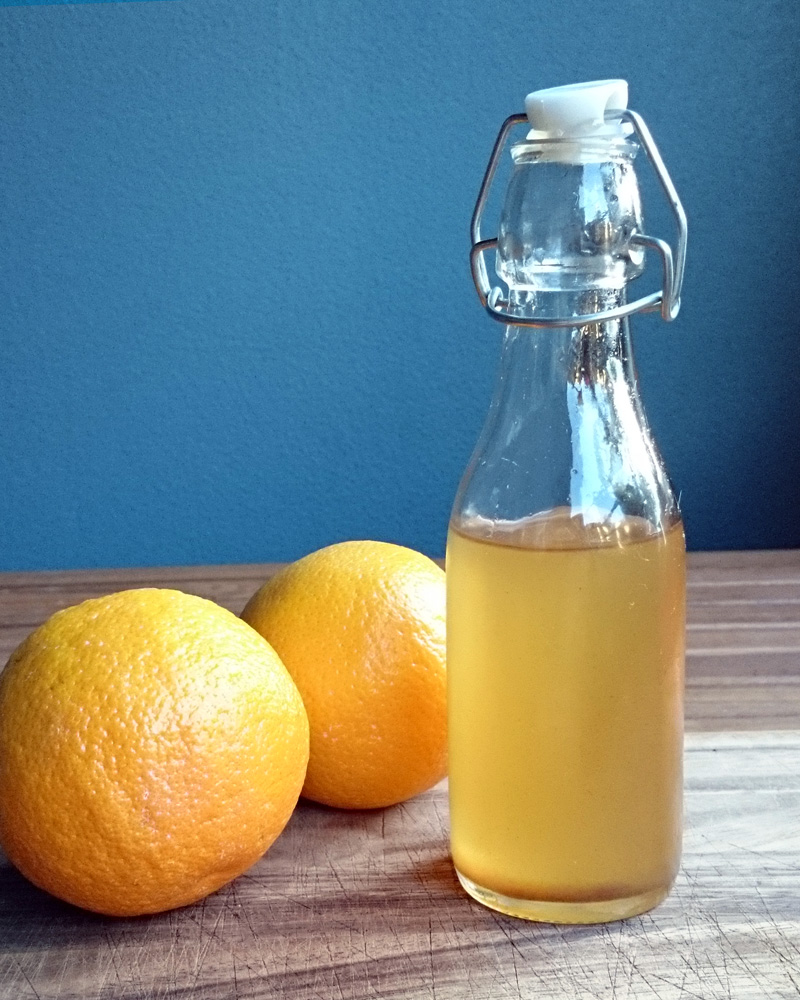
It is high summer here and, as such, a lot of our drinking has been built around clear spirits. In thinking that we would begin experimenting with some bourbon it seemed a spiced citrus syrup would be a useful ingredient to have on hand. The spices we used were selected to offer a combination of warmth, aroma, and depth (a necessary yet cumbersome descriptor). The grapefruit zest and amchur (dried green mango) provide a touch of acidity and bitterness, respectively, rounding the profile of the syrup. If you have a penchant for a particular spice alter the ingredients at will, though try to maintain the balance of spice to citrus and sweetness.

Spiced orange2

———-
Spiced Citrus Syrup

1 cup water
1 cup sugar
1 orange, cut into 5mm slices
½ cup grapefruit zest
1 cinnamon stick
2 star anise
1 clove
1 tbsp Amchur powder
1 Tbsp cardamom pods
1.5 Tsp coriander seeds

Combine all ingredients in a saucepan, bring to a boil and ensure all sugar has dissolved. Reduce heat and simmer for another 15-20 minutes, or until spiced to your tastes. Remove orange slices (reserve for another use, or simply eat), strain out solids, then bottle.
———-

An unnecessarily thorough guide to drying citrus

Many and varied are the uses for dried citrus: it serves a multitude of delicious culinary functions; finds a home in tea, desserts & syrups; apparently performs decorative and homeopathic tasks (neither of which are in any way endorsed by us); almost certainly has a role in a number of fetish activities that we definitely know absolutely nothing about; and, most relevantly, flavours cocktails and liqueurs.

If, like us, you’re the kind of person who likes a good drink and has the motivation to faff about in the kitchen making some of your own ingredients, drying your own citrus is a sensible idea. We began drying orange zest to flavour the amaro and vermouth we’re making (updates on their progress at a later date), though soon discovered it’s also very useful for flavouring simple syrups.

Drying fruit serves the two main purposes of concentrating flavour and significantly increasing longevity. The technique is remarkably simple and, relative to purchasing pre-dried goods, it’s very cost effective. The methods and recipes below can be adapted to any citrus you might fancy.
citrus

Zest

Start with the best quality fruit you can source, then thoroughly wash. Peel the orange in whatever way you find easiest until left with only the coloured skin – pith will increase the bitterness. If you haven’t done so in a while, you might want to clean your oven before you begin. The zest will be in the oven for hours and you don’t want it taking on the aroma of cremated pork fat. If you can’t leave your oven door permanently ajar open it periodically to allow moisture, and pleasant citrusy aromas, to escape.

There can be a significant disparity in the drying time across different batches. Some of ours were fully dried and crisp to the touch after 3 hours, while others required up to six – just keep an eye on them after a couple of hours. You’ll know it’s done when it’s reduced in size by about 50%, and is reasonably brittle. Dry, really.

———-
Dried Orange Zest 

2-3 Good quality oranges, washed (makes approximately 1 loosely packed cup)

If you have a sharp vegetable peeler, run it over the oranges. This should leave you with only the zest. If not, cut slices off with a knife, then remove all the white pith with a paring or serrated knife.

Preheat your oven to 60C. Place orange zest on a wire rack in the top third of the oven. Either leave the door slightly ajar, or open it periodically.

Dry for 3-6 hours, or until fully dehydrated and crisp. Store in an airtight container.
———-

citrus1

Fruit

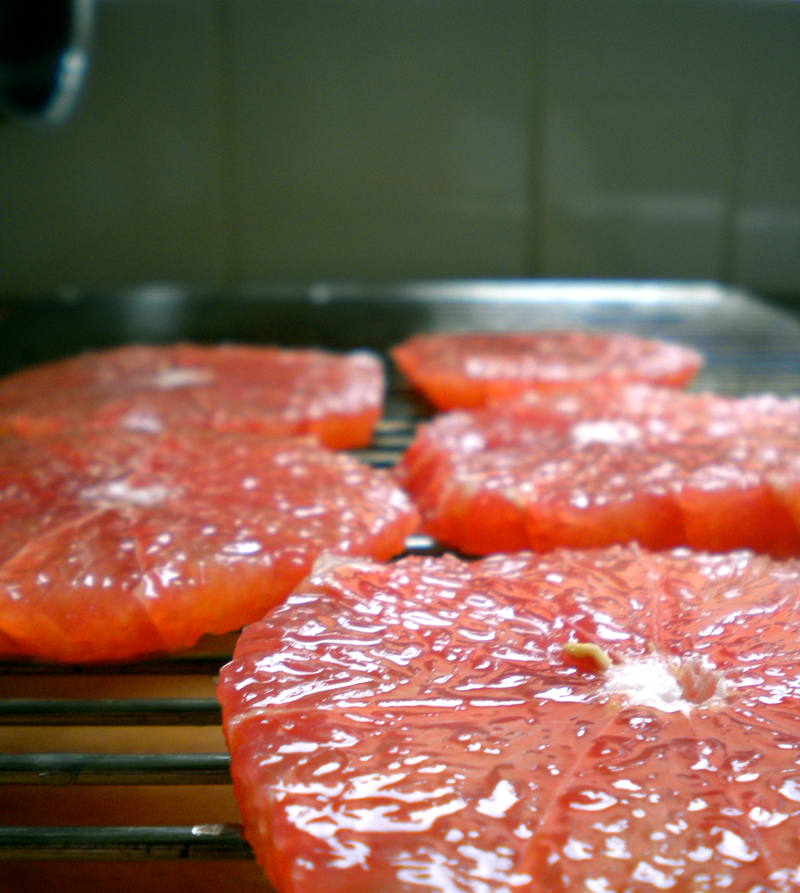
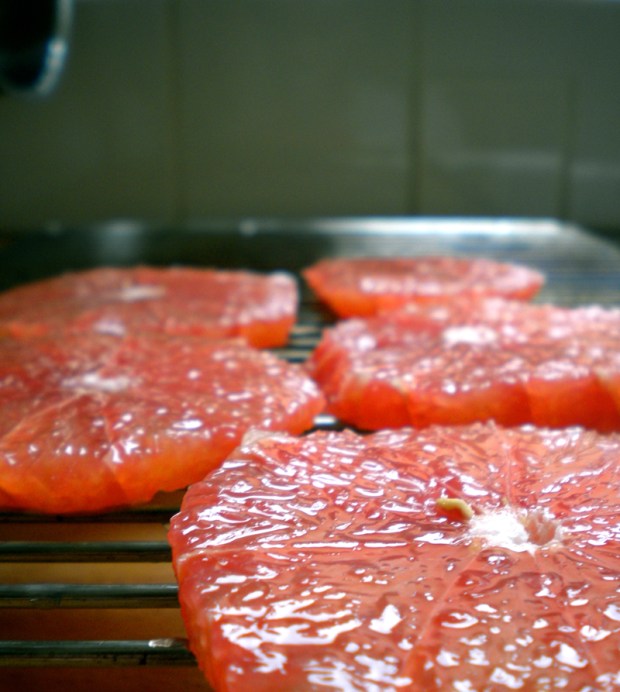
There are a number of ways you can go about drying slices of the fruit: unadulterated (sliced, zest and pith left on the flesh); skinned (sliced, zest and pith removed); and flavoured (dried with herbs and/or spices).

The unadulterated version is, unsurprisingly, the simplest. Cut the fruit into 5mm slices, then dry in the same manner as the zest. Slices will take longer than zest to dry given the increased thickness and moisture content, somewhere in the order of 8-10 hours. We used some of these whole slices as a flavouring agent for our initial batch of vermouth.

Drying slices without the zest and pith produces an end result with a sweeter, less complex flavour. All citrus survives only very briefly once the zest has been removed, so this is a good method for using any zested fruit you don’t plan on eating immediately. The best use for these is simply applying them directly to your face – they are essentially delicious orange chips.

———-
Dried Orange Chips 

1 Orange makes 6-10 chips, depending on size, so adjust to how many you require

Slice the top and bottom off each orange, then sit flat and cut away all remaining skin and pith. Cut the orange crossways into 5mm slices.

Preheat your oven to 60C. Space out the orange slices on a wire rack and dry until completely crisp, approximately ten hours. Store in an airtight container.
———-

You can be quite creative with what you use to flavour as citrus pairs well with a broad range of herbs and spices. Infused citrus helps make a great batch of mulled wine or punch. With herbs, spread them out in the bottom of a baking tray to form a bed for the slices, then drizzle with a little olive oil. Lightly seasoning the citrus prior to drying will highlight any herby goodness that they absorb. If you’re opting to spice the fruit first toast and grind any whole spices, then rub over the flesh with a little olive oil prior to drying.

———-
Rosemary Infused Orange Slices 

1 Orange makes 6-10 slices, so adjust to how many you require

Slice the top and bottom off each orange, then cut each orange crossways into 5mm slices.

Preheat your oven to 60C. Spread a sizeable bunch of rosemary over the base of a baking tray and drizzle with olive oil. Top with the oranges, lightly season, then cook until completely dried, approximately ten hours. Store in an airtight container.
———-
Loudon Drop

It is a truth, universally acknowledged, that a glorious sunny day in possession of birds, bees, flowers, and meandering strolls through rambling English gardens, should be in want of a refreshing libation. Of course, I live in Australia, so if it’s gloriously sunny most of the rambling gardens within easy reach of me will be tinder dry, and quite possibly on fire.

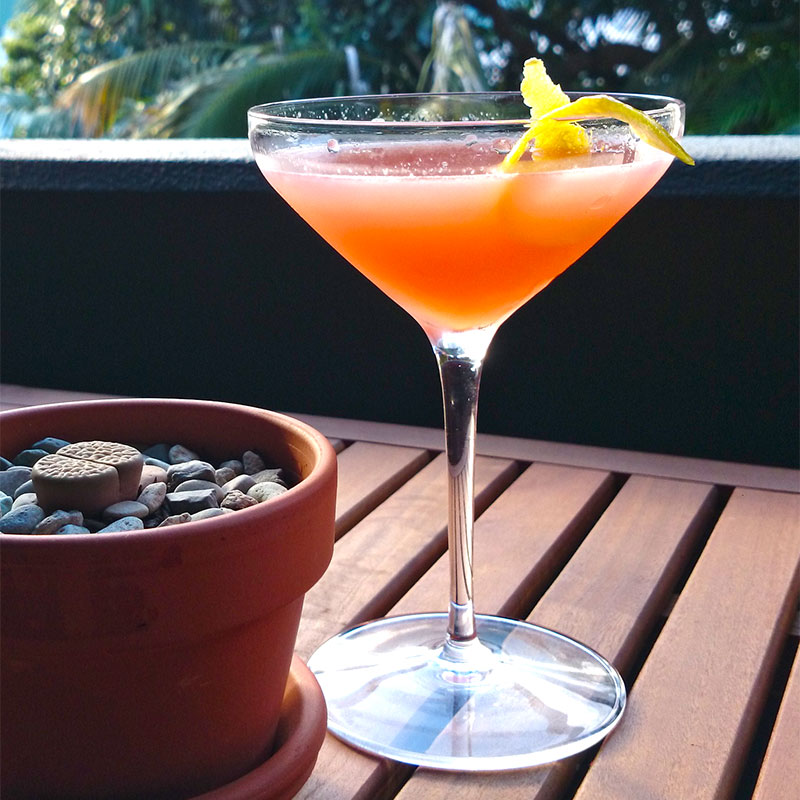
Luckily for me, alcohol is rather good at evoking a sensory experience, which saves me from having to fly to Europe every time I feel like seeing a faux Roman rotunda next to a pond. In the previous post we went through a chamomile and lavender syrup, scents that I find remind me of the traditional English country garden. The classic drink for a summers afternoon in such a garden is a fruit cup of some variety (commonly Pimms), but on the particular evening I was playing around with this recipe I was keen for something a bit sharper and stronger. For this purpose a basic gin sour seemed perfect, with the floral syrup complimenting the gin’s botanical notes.

Cocktail-square-zoom

———-
Loudon Drop

45ml dry London gin
20ml lemon juice
20ml chamomile & lavender syrup
Dash of bitters

Shake gin, lemon juice, bitters and flower syrup with ice. Serve in a chilled cocktail glass, garnished with lemon peel and/or edible flowers.
———-

As a tremendous lush I’d be inclined to make myself one on a double shot of gin, but this results in a fair bit of liquid, which is not quite as elegant in serving. I’ve also noticed this tends to cause some of my guests to throw up or remove articles of clothing. I’ve opted for a dry London gin as I particularly wanted good bit of juniper, but it’s worth playing around with gins that feature different botanicals, such as Gin Mare, which would go well with the lemon and lavender (two quite Mediterranean flavors), and bring the drink a Provencal note.

Chamomile & Lavender Syrup

Let’s kick things off with a simple syrup recipe. Syrups are excellent way of carrying all manner of flavors into a variety of cocktails. In this case we were trying to develop a syrup that could add a distinctly floral note to some cocktail concepts we’d been playing around with. The process we’ve opted for is to create a tisane from the flowers, which helps to draw out some of the more bitter vegetable characteristics in addition to the floral aroma, which we then strain and add cardamon and orange peel, before boiling again. The cardamon has a floral, lemon-peppery flavor which works particularly well with the flowers.

———-
Chamommile & Lavender Syrup

4 Tsp Dried camomile
4 Tbs Dried lavender
1 ½ Tbs Cardamom pods
⅔ Orange worth of fresh peel
2 Cups of sugar
2 Cups of water

Steep camomile and lavender in a small saucepan with 2 cups of boiling water. Briefly bring back to the boil (30s – 1m) with the herbs still infusing, and then remove from the heat and strain. Bring back to a boil and add the cardamom and peel and allow to simmer for a few minutes. Add the sugar and remove the peel, stirring until dissolved. Leave the cardamon to steep for at least 20 minutes as the mixture cools, before removing.
———-

Breaking the seal

In the interests of keeping mountains for climbing and molehills for blog introductions, this post will be brief and/or a very small mound of dirt. We are two inveterate drinkers who (possibly in a fit of drunken grandeur) decided to start cataloguing our forays into the arcane art of mixology.

Here we will meander through recipes, muse over methods, and bastardise the hell out of drinking history and culture. We’ll even try to make sure a fair proportion of what we publish is true. One magnificent thing about alcohol is, however, that virtually everything said about it is subjective. This seats booze firmly in the company of all the great cultural institutions, and mercifully frees us from any ethical concerns on the odd occasion we tart up a post in the name of a good yarn.