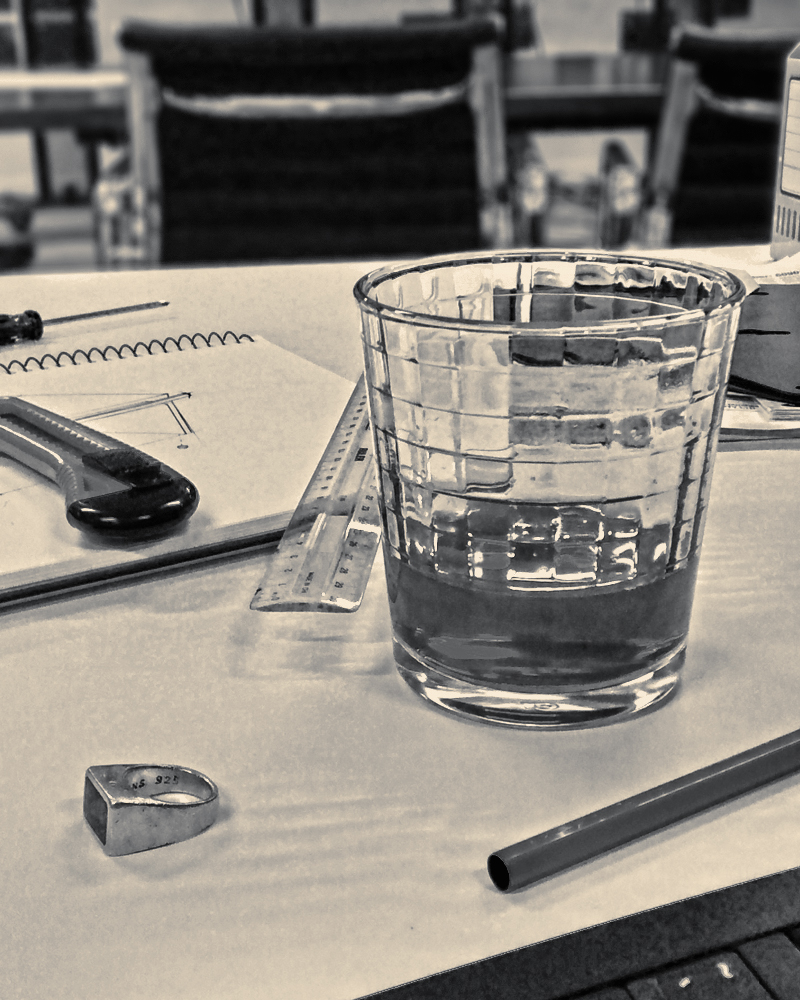
I’ve posted before about stress begetting nightcaps. Most people who work in an office, at one time or another, are stuck there post 9:30pm, working on something contemptible. Usually when that happens to me, I find myself hissing an Arya Stark style list of people responsible for my inability to relocate to a couch.
Alternatively however, I sometimes find myself up late, working on something interesting. This can happen at work, though I suspect it’s more common for people working on self driving cars at Google X than, say, for junior auditors at big accounting firms. I find it happens quite a bit at home; you’ve got a great idea, and you’re in the mood let your imagination soar like an eagle of genius on an updraft of inspiration, effortlessly floating above an ocean of tenuous metaphor.
When this trifecta of awesome occurs (it’s a trifecta; I will not tolerate people pointing that it isn’t), you need a drink that will fuel your flight. Assuming you made it through my protective barrier of wankery, below you will find the Functional Alchemist twist on three classic cocktails that we find rather perfectly compliment an evening of artistic endeavour.
Tip: Dispose of any poetry you write before heading to bed, and logout of Facebook before your first drink. Neither bare reckoning in the cold light of day. Also, if your style of inspiration involves dramatic hand gestures, use paper rather than your laptop to document your thoughts.
Hanky Panky
The Hanky Panky is a classic from Harry Craddock’s Savoy Cocktail Book. It is attributed to Ada Coleman (probably the most prominent female entry in mixology’s lopsidedly male history), who was the head bartender at the Savoy from 1903 to 1923; a remarkable feat given the time. The drink is, in it’s original form, one of the finest drinks I’ve ever tasted.
Here I’ve toyed slightly with the recipe to give the drink a more citrus-y character. The Maidenii is a spectacular semi-sweet vermouth which pairs the usual vermouth suspects with hints of strawberry gum and wattle. For the gin I’ve specified a dry London, though this drink highlights the interplay between botanicals, so any number of interesting new gins might do well. I particularly recommend the Botanist or Four Pillars.
This recipe calls for slightly more Fernet Branca than the classic two dashes, though Fernet bottles don’t have a drip insert so a “dash” could have be just about anything. I’ve also added some Cointreau, which adds a touch of sweetness and highlights the light peel notes in the vermouth. Note that they are both fairly dosage specific – the best bet is to use a 15ml jigger and try to fill it half and half with each, erring on the fernet side.
35ml dry gin
30ml Maidenii Classic Vermouth
8ml Fernet Branca
7ml Cointreau
Combine ingredients and stir over ice, then serve in a cocktail glass with a twist of lemon.
————-
Sazerac
No need to be overly descriptive here: This is what happens when you leave ordinary people in possession of herbs and fire. The blazer influence is clear and so it should be. You’d be stupid not to notice, and for that matter, to disagree.
I’ve avoided giving volumes here, as you are essentially just working on flavouring the base spirit (and can make it in any ratio you prefer), but should you choose to go with around two shots (60ml) of Rye, 10ml of simple syrup is a good starting point. The wash should coat the glass and give you something to flame, and a dash is formally given at 1/6th of a teaspoon (slightly less than 1ml), though in the case of the absinthe perhaps a touch more is needed. As always, experimentation is key.
Rye
Absinthe wash
Perchaudes Bitters
Thyme
Simple syrup
Wash an old fashioned glass in absinthe, coating the thyme. Set alight and burn off, then block the top of the glass to put out the flames. Stir rye, simple syrup and a dash more absinthe over ice, and add dash or two of bitters to taste. Serve in washed and flamed glass. Garnish with a crushed and lightly flamed slice of lemon peel and a flamed bay laurel leaf. Traditionally this drink is served without ice, however the glass will be warmish due to the flaming, so I leave that up to you.
————
Daiquiri
As an idiotic teenager making my initial forays into the world of booze, I was repulsed by daiquiris; I didn’t have bad taste, I was just stupid enough to confuse the pre-mixed, sugar and fruit monstrosities floating around with something resembling the legitimate form. Here, the ratios shown are designed to hit that sweet spot between the warmth and depth of the rum (it seems like a lot, just have some faith), the acidity from the lime, with just a touch of sweetness as a level. The coconut syrup brings a rich, if subtle, caramel note to the drink – and what’s more tropical than coconut?
75ml spiced rum
30ml freshly squeezed lime juice (if fresh lime juice is unavailable, substitute everything and make something that’s not a daiquiri)
15ml coconut sugar syrup
Combine over ice and shake well (a Boston shaker will do nicely). Serve up, in a cocktail glass.
————
 The Functional Alchemist