Gin

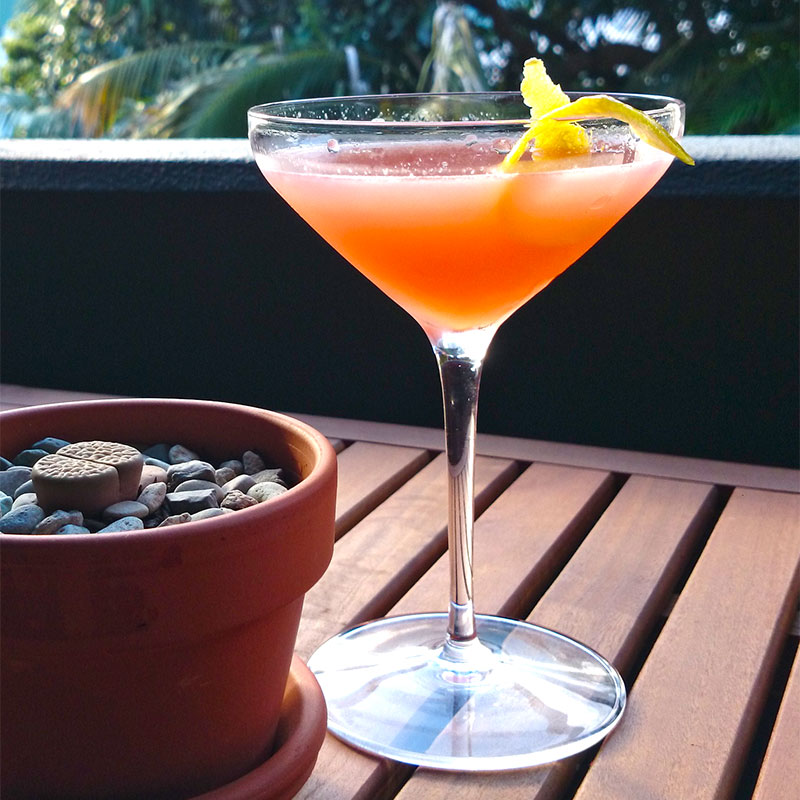
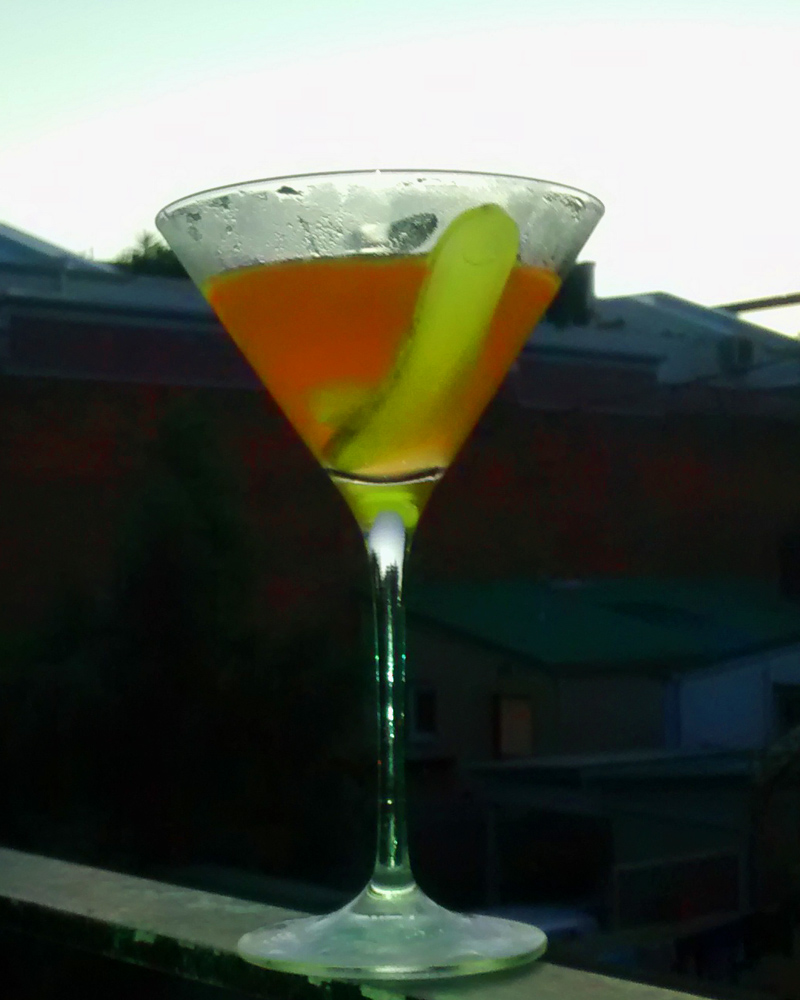
Smoked Tomato Gibson

Smoked-Gibson

It’s almost Summer in Sydney. Not, of course, that Sydney ever languishes in the depths of winter for particularly long. Depth of any form, as seen in seasonal changes, thought provoking artworks, literary tomes etc, is not something that Sydney does well; had Tolstoy lived in Sydney, he’d have been hard pressed to write a beer ad.

As the weather warms up I instinctively begin to desire to spend the majority of my time being idle. The first rays of spring hit me and I emerge from my winter chrysalis of tax returns and credit card bills as a supremely indolent butterfly, languid fluttering in the direction of a deckchair and drink combination (and thus begins the process of re-bloating the credit card debt).

The warmer weather, and the balmy nights in particular, need an alfresco barbecue-y drink. Which is a legitimate description, fuck you very much. With the notable exception of the bloody mary, savoury flavours are unfortunately overlooked in the pantheon of popular cocktails.

I like the tomato in a bloody mary for it’s particular mix of acidity and umami, however I wanted the kick of a short drink, so in this case I’ve based the drink around a gibson. To reduce the volume of liquid I have to add, while retaining the tomato acidity and umami flavours, I’ve used what basically amounts to a concentrated tomato soup with some added Worster sauce.

———-

Smoked Tomato Gibson
45ml barrel aged gin
10ml Dolin dry french vermouth
10ml smoked tomato concentrate
2 dashes of Worcestershire sauce
1 thin slice of dill pickle (sliced lengthwise)
Small fennel leaf sprig
¼ teaspoon of pickle juice
Tiny amount of sea salt
 

Stir ingredients over ice and serve up (chilled cocktail glass). Garnish with the slice of dill pickle skewered on a toothpick, and the fennel sprig floated on top.

———-

Smoked Tomato Concentrate
3 Vine ripened tomatoes
4 Roma tomatoes
1 row of cherry tomatoes on the vine
Large onion
2 garlic cloves
1 fennel bulb
¼ cup fresh tarragon
¼ cup flat-leaf parsley
black pepper
1 tsp sea salt
olive oil

Dried jasmine rice and wood chips (for smoking)

Place dry rice and wood chips in the bottom of an uncoated steel/aluminium vessel. Lay a folded piece of alfoil over the top of the rice and wood chip, and set on a medium heat on a barbecue (it’s possible to do the same thing in the bottom of a wok on your stove, but you’ll want to disconnect your smoke detector). Place the cherry tomatoes on the foil, loosely cover the vessel, and check periodically until the tomatoes have started to blacken and wilt. No surprisingly, they should also smell smokey.

Coarsely chop your smoked tomatoes, fresh tomatos, onions, garlic, and fennel. Reserve a few fronds of fennel for a cocktail garnish, but toss the rest – along with onions and garlic – into a large stock pot with olive oil, and soften it all up over medium heat for about 12-15 minutes. Add the herbs towards the end of this period and cover with 4 cups of water. Allow to simmer for 45 minutes.

After the soup is cooked, strain the solids out with cheesecloth, bring back up to a simmer, allow the liquid to reduce by half, then remove from the heat and allow to cool. The concentrate can be used as it, but I have found that a freeze/thaw strain is quite good at removing most of the particulates. Don’t worry about perfect clarification, which would be difficult as tomatos have bugger all gelatin in them. If the cloudiness bothers you, it would be possible to add gelatin or use an egg raft, or even use agar clarification.

It’s worth noting that the strained tomato, onion and fennel solids work quite well as the base for a number of tomato based stews, such as a ragu or bouillabaisse, so chuck them in a container for later.

To increase the shelf life of the clarified soup, and prevent the martini from becoming overly diluted, I have generally added enough of a high proof neutral alcohol (spiritas or a neutral vodka) to take the alcohol content up to around 15%. Alternatively, it freezes very well, and also goes particularly well with a cheese toasty.

Three Late Night Classics

AfterworkClassics_Sepia_Highlights

I’ve posted before about stress begetting nightcaps. Most people who work in an office, at one time or another, are stuck there post 9:30pm, working on something contemptible. Usually when that happens to me, I find myself hissing an Arya Stark style list of people responsible for my inability to relocate to a couch.

Alternatively however, I sometimes find myself up late, working on something interesting. This can happen at work, though I suspect it’s more common for people working on self driving cars at Google X than, say, for junior auditors at big accounting firms. I find it happens quite a bit at home; you’ve got a great idea, and you’re in the mood let your imagination soar like an eagle of genius on an updraft of inspiration, effortlessly floating above an ocean of tenuous metaphor.

When this trifecta of awesome occurs (it’s a trifecta; I will not tolerate people pointing that it isn’t), you need a drink that will fuel your flight. Assuming you made it through my protective barrier of wankery, below you will find the Functional Alchemist twist on three classic cocktails that we find rather perfectly compliment an evening of artistic endeavour.

Tip: Dispose of any poetry you write before heading to bed, and logout of Facebook before your first drink. Neither bare reckoning in the cold light of day. Also, if your style of inspiration involves dramatic hand gestures, use paper rather than your laptop to document your thoughts.

Hanky Panky

The Hanky Panky is a classic from Harry Craddock’s Savoy Cocktail Book. It is attributed to Ada Coleman (probably the most prominent female entry in mixology’s lopsidedly male history), who was the head bartender at the Savoy from 1903 to 1923; a remarkable feat given the time. The drink is, in it’s original form, one of the finest drinks I’ve ever tasted.

Here I’ve toyed slightly with the recipe to give the drink a more citrus-y character. The Maidenii is a spectacular semi-sweet vermouth which pairs the usual vermouth suspects with hints of strawberry gum and wattle. For the gin I’ve specified a dry London, though this drink highlights the interplay between botanicals, so any number of interesting new gins might do well. I particularly recommend the Botanist or Four Pillars.

This recipe calls for slightly more Fernet Branca than the classic two dashes, though Fernet bottles don’t have a drip insert so a “dash” could have be just about anything. I’ve also added some Cointreau, which adds a touch of sweetness and highlights the light peel notes in the vermouth. Note that they are both fairly dosage specific – the best bet is to use a 15ml jigger and try to fill it half and half with each, erring on the fernet side.

35ml dry gin

30ml Maidenii Classic Vermouth

8ml Fernet Branca

7ml Cointreau

Combine ingredients and stir over ice, then serve in a cocktail glass with a twist of lemon.

————-

Sazerac

No need to be overly descriptive here: This is what happens when you leave ordinary people in possession of herbs and fire. The blazer influence is clear and so it should be. You’d be stupid not to notice, and for that matter, to disagree.

I’ve avoided giving volumes here, as you are essentially just working on flavouring the base spirit (and can make it in any ratio you prefer), but should you choose to go with around two shots (60ml) of Rye, 10ml of simple syrup is a good starting point. The wash should coat the glass and give you something to flame, and a dash is formally given at 1/6th of a teaspoon (slightly less than 1ml), though in the case of the absinthe perhaps a touch more is needed. As always, experimentation is key.

Rye

Absinthe wash

Perchaudes Bitters

Thyme

Simple syrup

Wash an old fashioned glass in absinthe, coating the thyme. Set alight and burn off, then block the top of the glass to put out the flames. Stir rye, simple syrup and a dash more absinthe over ice, and add dash or two of bitters to taste. Serve in washed and flamed glass. Garnish with a crushed and lightly flamed slice of lemon peel and a flamed bay laurel leaf. Traditionally this drink is served without ice, however the glass will be warmish due to the flaming, so I leave that up to you.

————

Daiquiri

As an idiotic teenager making my initial forays into the world of booze, I was repulsed by daiquiris; I didn’t have bad taste, I was just stupid enough to confuse the pre-mixed, sugar and fruit monstrosities floating around with something resembling the legitimate form. Here, the ratios shown are designed to hit that sweet spot between the warmth and depth of the rum (it seems like a lot, just have some faith), the acidity from the lime, with just a touch of sweetness as a level. The coconut syrup brings a rich, if subtle, caramel note to the drink – and what’s more tropical than coconut?

75ml spiced rum

30ml freshly squeezed lime juice (if fresh lime juice is unavailable, substitute everything and make something that’s not a daiquiri)

15ml coconut sugar syrup

Combine over ice and shake well (a Boston shaker will do nicely). Serve up, in a cocktail glass.

————

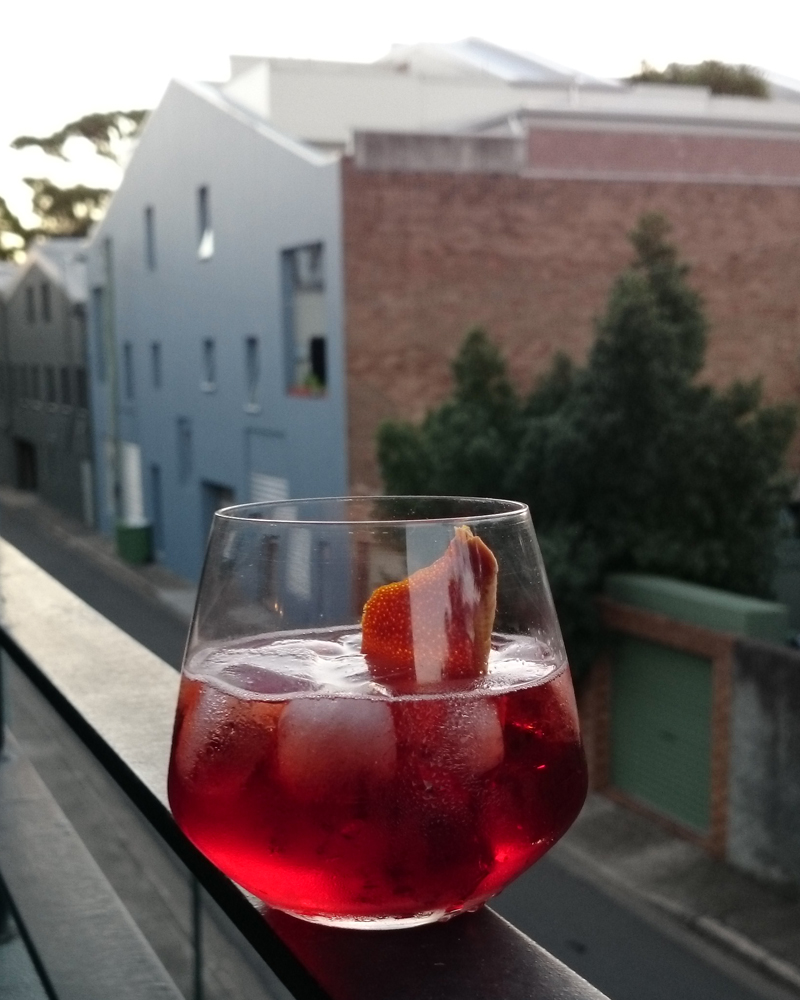
Auvergne Negroni

Gentian-Negroni

The negroni was born, illegitimate and out of wedlock, after a sordid affair between an Italian nobleman and an americano – a coupling thankfully free of his Florentine member experiencing the difficulties of navigating an awkwardly narrow bottle neck. Count Camillo Negroni, assuming my wild extrapolations from scant historical data are correct, was quite the booze hound. Only a seasoned imbiber would order a pleasant, if mild, aperitif and ask the barkeep to replace the non-alcoholic mixer with a healthy slug of gin. If he wasn’t a Count by birth that one deft manoeuvre would have assured his place amongst the nobility.

The origin story of our drink is less interesting, and much less manly. Briefly summated, we found some seemingly obscure gentian liqueur, Pagès Gentiane d’Auvergne, in a local bottle shop and thought its bittersweet, herbal flavour appropriate for a negroni. Riveting stuff.

Gentian has a strong vegetal and woody flavour that is very hard to mistake for anything else. This liqueur is potently bitter, and vibrantly yellow, so we lowered it’s volume relative to the gin and vermouth. Rosso Antico, which you might remember from such decades as the 1970s, provides ample sweetness in the fight against the bitterness of the gentian, though it is far from the most complex of sweet vermouths (technically it’s a herbal dessert wine, not a vermouth). Dubonnet, classed as a quinquina due to its cinchona bark/quinine content, was included in the mix to strengthen the vermouth side of the drink, and because quinine and gentian combine extraordinarily well (one of the many reasons Lillet and Suze work together so nicely in a white negroni).

The resulting negroni is complex and, like a Terminator timeline, difficult to describe in a rational sense. There is tension and confusion but, ultimately, resolution and great satisfaction.

———-
Auvergne Negroni

45ml gin
30ml Rosso Antico
15ml Dubonnet
15ml Pages Gentian d’Auvergne
Slice of dried orange peel

Mixed over a large ice cube in an old fashioned glass, garnish with a slice of dried orange peel.
———-

Orange Borough

Orange_borough

Working until 11pm, sorting through piles of bills, days that end in “y”; there are those stressful occasions in life which deserve (require?) a relaxing nightcap. Though you’d be forgiven for wanting to empty half a bottle of bourbon into a novelty stein when such a situation arises, this approach lacks the calming ritual that the preparation of a fine libation can provide. It also encourages the kind of drinking that causes people to be compelled to stop drinking and start attending weekly meetings.

Better then to mix yourself something delicious. My preference is usually for something along the lines of a negroni or a manhattan, but I’m also partial, particularly in the winter months, to something sweet and spicy such as a mulled wine or glögg. Here I’ve taken the basic structure of a Bronx (with a nod to a couple of the other Boroughs), but increased the sweetness and bitterness by swapping the juice for the spiced citrus syrup from the previous post, increasing the quantity of red vermouth, and adding a dash of bitters. For the gin, I’d advise something fairly bold, as there are a fair few other flavors at work, and one can vary the sugar content by playing with different vermouths and the ratio of sweet to dry.

———-
Orange Borough

45ml gin
30ml sweet (red) vermouth
15ml dry vermouth
15ml spiced citrus syrup (link)
Dash Agnostura bitters

Combine ingredients with ice in a large glass or cocktail shaker and stir, then strain into a chilled old fashioned glass over a large ice cube. Serve with a twist of orange peel.
———-

Loudon Drop

It is a truth, universally acknowledged, that a glorious sunny day in possession of birds, bees, flowers, and meandering strolls through rambling English gardens, should be in want of a refreshing libation. Of course, I live in Australia, so if it’s gloriously sunny most of the rambling gardens within easy reach of me will be tinder dry, and quite possibly on fire.

Luckily for me, alcohol is rather good at evoking a sensory experience, which saves me from having to fly to Europe every time I feel like seeing a faux Roman rotunda next to a pond. In the previous post we went through a chamomile and lavender syrup, scents that I find remind me of the traditional English country garden. The classic drink for a summers afternoon in such a garden is a fruit cup of some variety (commonly Pimms), but on the particular evening I was playing around with this recipe I was keen for something a bit sharper and stronger. For this purpose a basic gin sour seemed perfect, with the floral syrup complimenting the gin’s botanical notes.

Cocktail-square-zoom

———-
Loudon Drop

45ml dry London gin
20ml lemon juice
20ml chamomile & lavender syrup
Dash of bitters

Shake gin, lemon juice, bitters and flower syrup with ice. Serve in a chilled cocktail glass, garnished with lemon peel and/or edible flowers.
———-

As a tremendous lush I’d be inclined to make myself one on a double shot of gin, but this results in a fair bit of liquid, which is not quite as elegant in serving. I’ve also noticed this tends to cause some of my guests to throw up or remove articles of clothing. I’ve opted for a dry London gin as I particularly wanted good bit of juniper, but it’s worth playing around with gins that feature different botanicals, such as Gin Mare, which would go well with the lemon and lavender (two quite Mediterranean flavors), and bring the drink a Provencal note.