Author: stuntalbatross

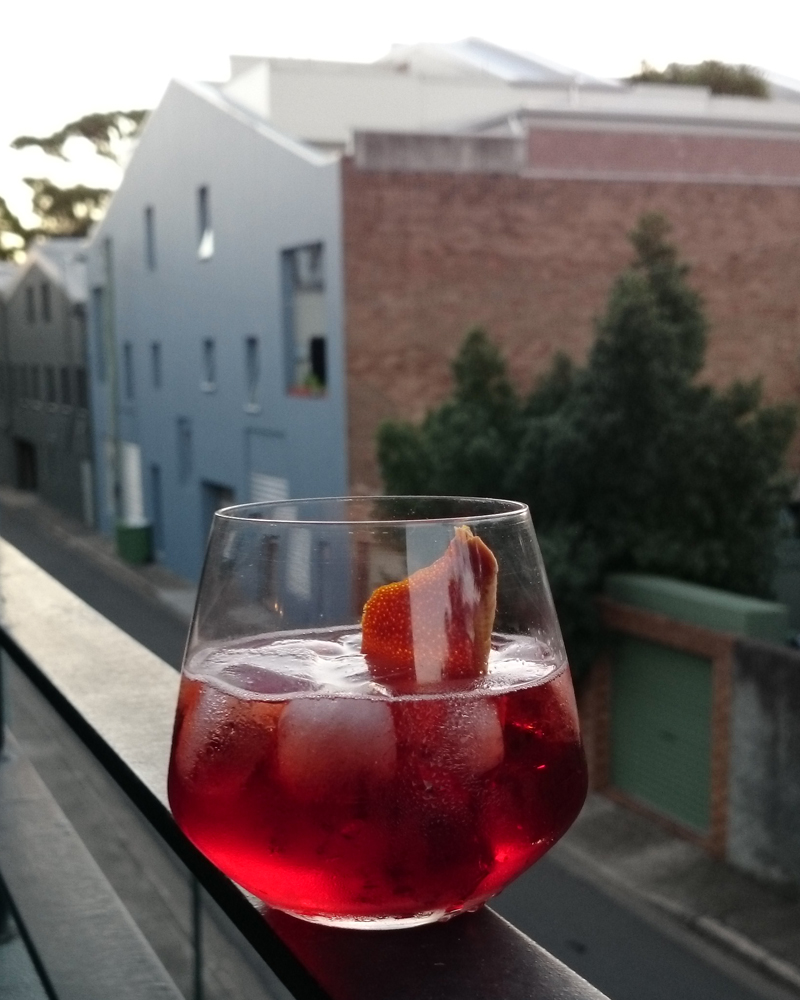
Auvergne Negroni

Gentian-Negroni

The negroni was born, illegitimate and out of wedlock, after a sordid affair between an Italian nobleman and an americano – a coupling thankfully free of his Florentine member experiencing the difficulties of navigating an awkwardly narrow bottle neck. Count Camillo Negroni, assuming my wild extrapolations from scant historical data are correct, was quite the booze hound. Only a seasoned imbiber would order a pleasant, if mild, aperitif and ask the barkeep to replace the non-alcoholic mixer with a healthy slug of gin. If he wasn’t a Count by birth that one deft manoeuvre would have assured his place amongst the nobility.

The origin story of our drink is less interesting, and much less manly. Briefly summated, we found some seemingly obscure gentian liqueur, Pagès Gentiane d’Auvergne, in a local bottle shop and thought its bittersweet, herbal flavour appropriate for a negroni. Riveting stuff.

Gentian has a strong vegetal and woody flavour that is very hard to mistake for anything else. This liqueur is potently bitter, and vibrantly yellow, so we lowered it’s volume relative to the gin and vermouth. Rosso Antico, which you might remember from such decades as the 1970s, provides ample sweetness in the fight against the bitterness of the gentian, though it is far from the most complex of sweet vermouths (technically it’s a herbal dessert wine, not a vermouth). Dubonnet, classed as a quinquina due to its cinchona bark/quinine content, was included in the mix to strengthen the vermouth side of the drink, and because quinine and gentian combine extraordinarily well (one of the many reasons Lillet and Suze work together so nicely in a white negroni).

The resulting negroni is complex and, like a Terminator timeline, difficult to describe in a rational sense. There is tension and confusion but, ultimately, resolution and great satisfaction.

———-
Auvergne Negroni

45ml gin
30ml Rosso Antico
15ml Dubonnet
15ml Pages Gentian d’Auvergne
Slice of dried orange peel

Mixed over a large ice cube in an old fashioned glass, garnish with a slice of dried orange peel.
———-

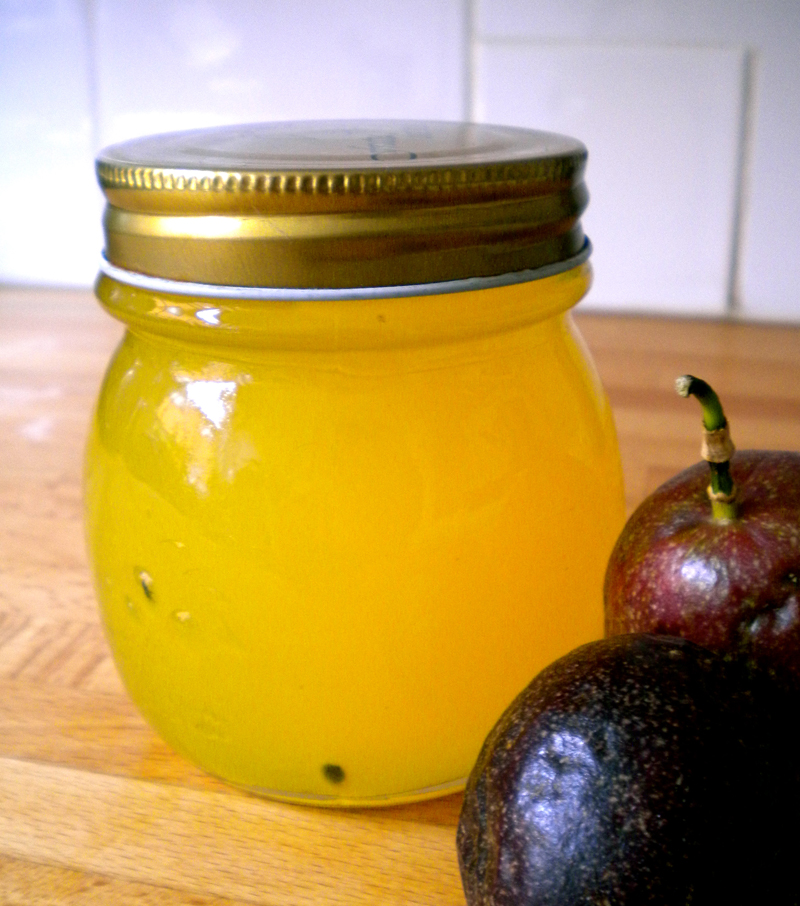
Passionfruit & Mint Syrup

Passionfruit, for those of us living in warmer climates, is a staple of summer. The interior of the fruit is vibrant, aromatic, and delicious; rather lucky as the exterior of the fruit has the appearance of a pickled testicle. The rich sweetness of the flesh is balanced by a tart acidity, making the fruit both versatile and adept at enhancing other flavours – it is equally at home in a bourbon or gin based beverage, and certainly knows its way around a stein full of tiki-based pleasure.

When making chutneys or jams, a combination of cooked and fresh fruit often produces the fullest flavour, so that process was opted for here. In the face of so much sugar and passionfruit the mint is rather subtle, it adds complexity and serves to highlight the flavour of the fruit. The amount of mint can be adjusted to suit your taste or intended use, or omitted entirely if you so desire.

It’s worth noting that our most recent batch of this syrup lasted about 3 days in the fridge, on account of it making a particularly excellent cordial. I strongly recommend a splash of it with soda water over ice, plus a few fresh mint leaves to garnish. If you suffer from a medieval European suspicion of water on it’s own (don’t you? Shouldn’t you?), you could always “disinfect” it with a generous splash of gin.

passionfruit

———-
Passionfruit & Mint Syrup

1 cup water
1 cup sugar
½ cup passionfruit juice & seeds (roughly 6-8 passion fruit) plus a few additional passionfruit
Handful fresh mint leaves

Mix water, sugar, and the ½ cup of passion fruit in a pan. Place over a medium high heat, make sure the sugar dissolves, and bring to a boil. Reduce to a simmer then remove from the heat after 1-2 minutes. Stir in the flesh from the remaining passionfruit and the mint leaves, cover, and let stand for a few hours. Strain out the solids, then bottle.
———-

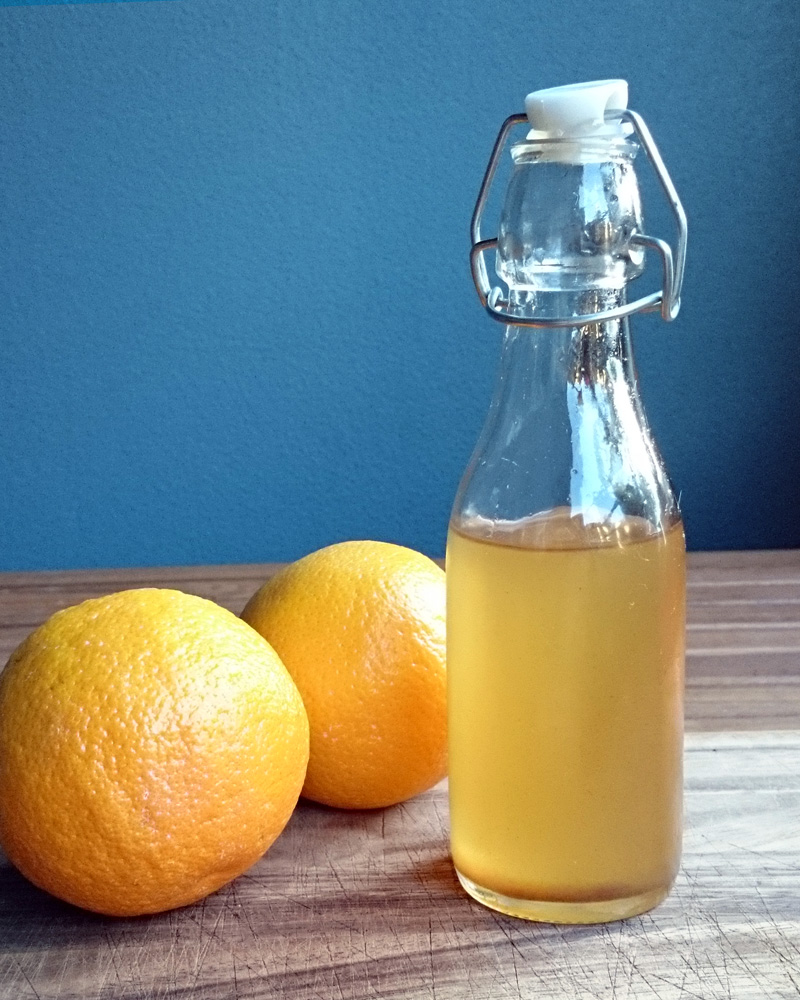
Spiced Citrus Syrup

Spiced_orange_syrup3

Piercing winter temperatures, hefty coats, and stiff, dark drinks are a magnificent combination – the equally pleasing antithesis to white sand, tiki drinks, and cocktail umbrellas. An Old Fashioned or a Negroni – any drink of that ilk – is ideal for keeping the cold at bay, and pairs nicely with a spiced citrus syrup.

It is high summer here and, as such, a lot of our drinking has been built around clear spirits. In thinking that we would begin experimenting with some bourbon it seemed a spiced citrus syrup would be a useful ingredient to have on hand. The spices we used were selected to offer a combination of warmth, aroma, and depth (a necessary yet cumbersome descriptor). The grapefruit zest and amchur (dried green mango) provide a touch of acidity and bitterness, respectively, rounding the profile of the syrup. If you have a penchant for a particular spice alter the ingredients at will, though try to maintain the balance of spice to citrus and sweetness.

Spiced orange2

———-
Spiced Citrus Syrup

1 cup water
1 cup sugar
1 orange, cut into 5mm slices
½ cup grapefruit zest
1 cinnamon stick
2 star anise
1 clove
1 tbsp Amchur powder
1 Tbsp cardamom pods
1.5 Tsp coriander seeds

Combine all ingredients in a saucepan, bring to a boil and ensure all sugar has dissolved. Reduce heat and simmer for another 15-20 minutes, or until spiced to your tastes. Remove orange slices (reserve for another use, or simply eat), strain out solids, then bottle.
———-

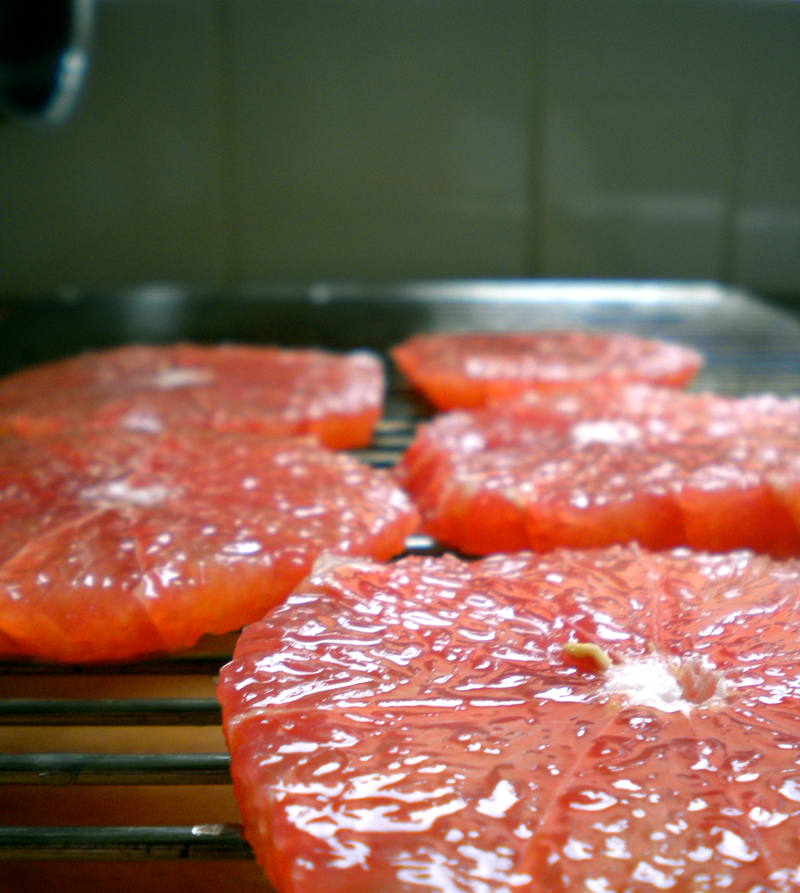
An unnecessarily thorough guide to drying citrus

Many and varied are the uses for dried citrus: it serves a multitude of delicious culinary functions; finds a home in tea, desserts & syrups; apparently performs decorative and homeopathic tasks (neither of which are in any way endorsed by us); almost certainly has a role in a number of fetish activities that we definitely know absolutely nothing about; and, most relevantly, flavours cocktails and liqueurs.

If, like us, you’re the kind of person who likes a good drink and has the motivation to faff about in the kitchen making some of your own ingredients, drying your own citrus is a sensible idea. We began drying orange zest to flavour the amaro and vermouth we’re making (updates on their progress at a later date), though soon discovered it’s also very useful for flavouring simple syrups.

Drying fruit serves the two main purposes of concentrating flavour and significantly increasing longevity. The technique is remarkably simple and, relative to purchasing pre-dried goods, it’s very cost effective. The methods and recipes below can be adapted to any citrus you might fancy.
citrus

Zest

Start with the best quality fruit you can source, then thoroughly wash. Peel the orange in whatever way you find easiest until left with only the coloured skin – pith will increase the bitterness. If you haven’t done so in a while, you might want to clean your oven before you begin. The zest will be in the oven for hours and you don’t want it taking on the aroma of cremated pork fat. If you can’t leave your oven door permanently ajar open it periodically to allow moisture, and pleasant citrusy aromas, to escape.

There can be a significant disparity in the drying time across different batches. Some of ours were fully dried and crisp to the touch after 3 hours, while others required up to six – just keep an eye on them after a couple of hours. You’ll know it’s done when it’s reduced in size by about 50%, and is reasonably brittle. Dry, really.

———-
Dried Orange Zest 

2-3 Good quality oranges, washed (makes approximately 1 loosely packed cup)

If you have a sharp vegetable peeler, run it over the oranges. This should leave you with only the zest. If not, cut slices off with a knife, then remove all the white pith with a paring or serrated knife.

Preheat your oven to 60C. Place orange zest on a wire rack in the top third of the oven. Either leave the door slightly ajar, or open it periodically.

Dry for 3-6 hours, or until fully dehydrated and crisp. Store in an airtight container.
———-

citrus1

Fruit

There are a number of ways you can go about drying slices of the fruit: unadulterated (sliced, zest and pith left on the flesh); skinned (sliced, zest and pith removed); and flavoured (dried with herbs and/or spices).

The unadulterated version is, unsurprisingly, the simplest. Cut the fruit into 5mm slices, then dry in the same manner as the zest. Slices will take longer than zest to dry given the increased thickness and moisture content, somewhere in the order of 8-10 hours. We used some of these whole slices as a flavouring agent for our initial batch of vermouth.

Drying slices without the zest and pith produces an end result with a sweeter, less complex flavour. All citrus survives only very briefly once the zest has been removed, so this is a good method for using any zested fruit you don’t plan on eating immediately. The best use for these is simply applying them directly to your face – they are essentially delicious orange chips.

———-
Dried Orange Chips 

1 Orange makes 6-10 chips, depending on size, so adjust to how many you require

Slice the top and bottom off each orange, then sit flat and cut away all remaining skin and pith. Cut the orange crossways into 5mm slices.

Preheat your oven to 60C. Space out the orange slices on a wire rack and dry until completely crisp, approximately ten hours. Store in an airtight container.
———-
You can be quite creative with what you use to flavour as citrus pairs well with a broad range of herbs and spices. Infused citrus helps make a great batch of mulled wine or punch. With herbs, spread them out in the bottom of a baking tray to form a bed for the slices, then drizzle with a little olive oil. Lightly seasoning the citrus prior to drying will highlight any herby goodness that they absorb. If you’re opting to spice the fruit first toast and grind any whole spices, then rub over the flesh with a little olive oil prior to drying.

———-
Rosemary Infused Orange Slices 

1 Orange makes 6-10 slices, so adjust to how many you require

Slice the top and bottom off each orange, then cut each orange crossways into 5mm slices.

Preheat your oven to 60C. Spread a sizeable bunch of rosemary over the base of a baking tray and drizzle with olive oil. Top with the oranges, lightly season, then cook until completely dried, approximately ten hours. Store in an airtight container.
———-