Month: February 2014

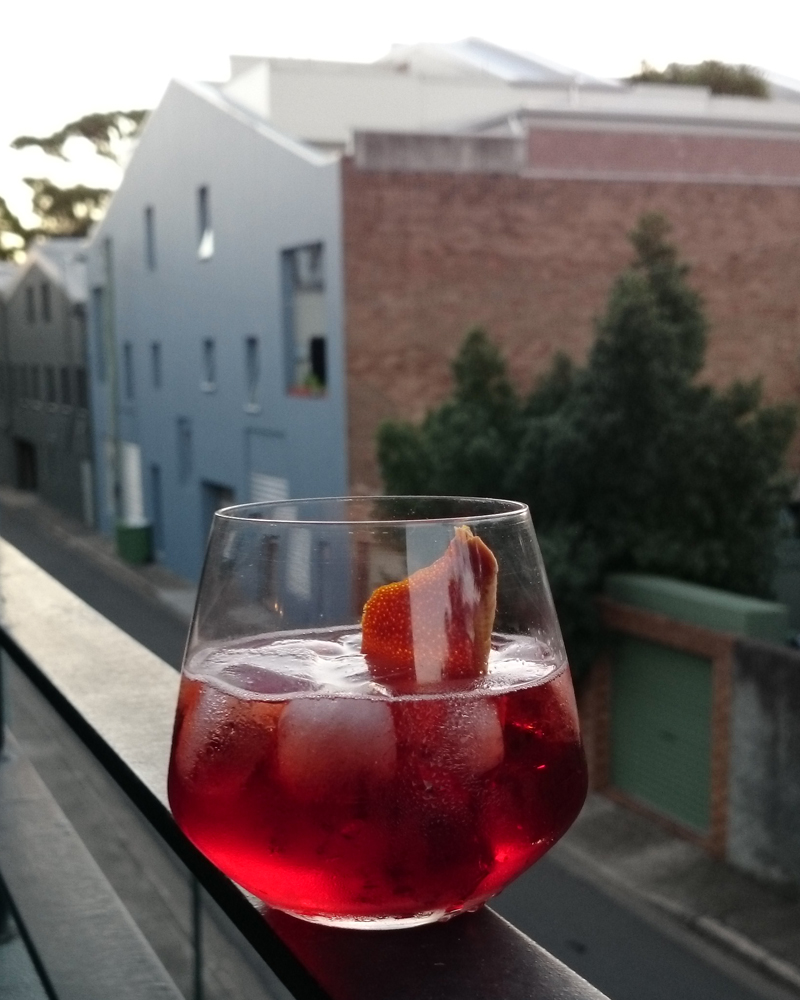
Auvergne Negroni

Gentian-Negroni

The negroni was born, illegitimate and out of wedlock, after a sordid affair between an Italian nobleman and an americano – a coupling thankfully free of his Florentine member experiencing the difficulties of navigating an awkwardly narrow bottle neck. Count Camillo Negroni, assuming my wild extrapolations from scant historical data are correct, was quite the booze hound. Only a seasoned imbiber would order a pleasant, if mild, aperitif and ask the barkeep to replace the non-alcoholic mixer with a healthy slug of gin. If he wasn’t a Count by birth that one deft manoeuvre would have assured his place amongst the nobility.

The origin story of our drink is less interesting, and much less manly. Briefly summated, we found some seemingly obscure gentian liqueur, Pagès Gentiane d’Auvergne, in a local bottle shop and thought its bittersweet, herbal flavour appropriate for a negroni. Riveting stuff.

Gentian has a strong vegetal and woody flavour that is very hard to mistake for anything else. This liqueur is potently bitter, and vibrantly yellow, so we lowered it’s volume relative to the gin and vermouth. Rosso Antico, which you might remember from such decades as the 1970s, provides ample sweetness in the fight against the bitterness of the gentian, though it is far from the most complex of sweet vermouths (technically it’s a herbal dessert wine, not a vermouth). Dubonnet, classed as a quinquina due to its cinchona bark/quinine content, was included in the mix to strengthen the vermouth side of the drink, and because quinine and gentian combine extraordinarily well (one of the many reasons Lillet and Suze work together so nicely in a white negroni).

The resulting negroni is complex and, like a Terminator timeline, difficult to describe in a rational sense. There is tension and confusion but, ultimately, resolution and great satisfaction.

———-
Auvergne Negroni

45ml gin
30ml Rosso Antico
15ml Dubonnet
15ml Pages Gentian d’Auvergne
Slice of dried orange peel

Mixed over a large ice cube in an old fashioned glass, garnish with a slice of dried orange peel.
———-
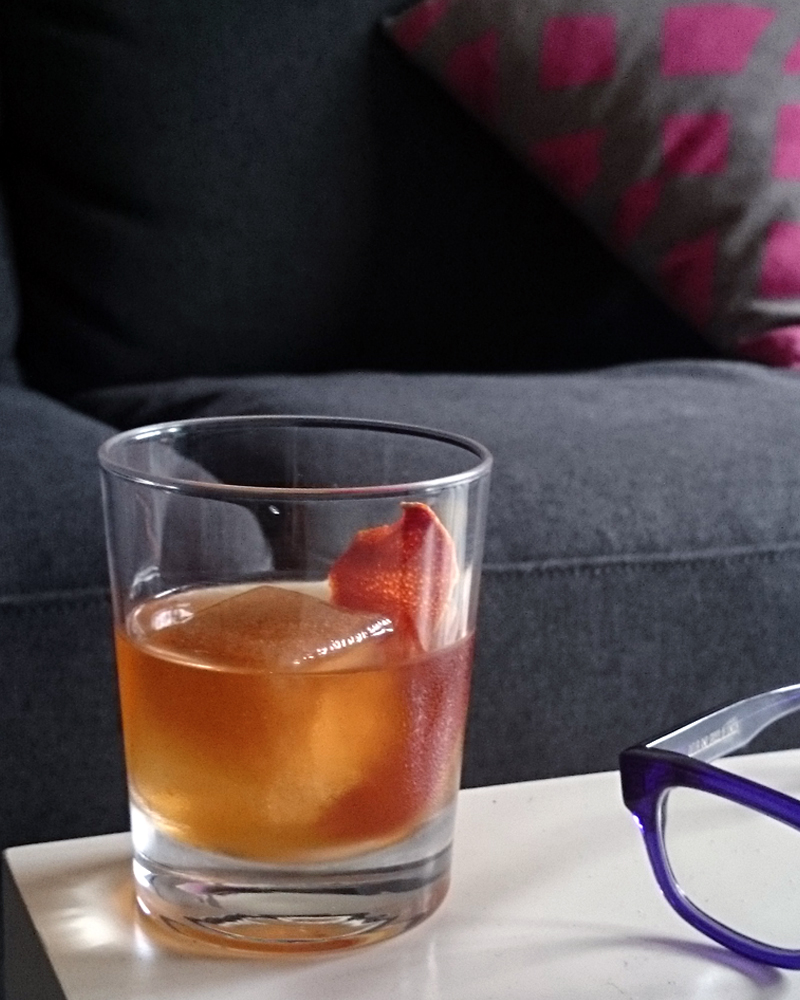
Breakfast Old Fashioned

Breakfast-Old-Fashioned

Tea based cocktails are in vogue in the artisan cocktail world right now. The factors that cause certain ingredients, styles, or methodologies to leap to the forefront of cool in a subjective art form are complicated, but my extensive research into the rise of this phenomenon has revealed that it can be traced to shut up, that’s why. Irrespective of the original provenance of the idea, the ability of tea to elevate a cocktail is almost as dramatic as its ability to plug the crumpet hole of a whining Englishman (#theAshes).

This post was meant to go up yesterday morning, when pointing out that I enjoy a strong cup of black tea on a lazy Sunday morning would have made for a thematically consistent introduction to the recipe. Instead, I’ll content myself with insulting the English and noting that standing over one’s tea while it brews is a time honoured method of winding down the office clock on a Monday afternoon. (If I was to design a cocktail for a Monday afternoon it’d be based around intravenous vodka, so let’s pretend it’s Sunday morning.)

Having skipped the background research and buggered up the theme, let’s move on to the drink itself. In my opinion, the bitter tannins of black tea combine particularly well with an aged rum or a whiskey, so we’ve used the basic structure of an old fashioned as a base. The old fashioned is a marvellously simple drink; just a base spirit, a sugar syrup, and a bittering agent mixed over ice. In effect, it’s a sort of post-mix herbal liqueur.

I’ve used Jim Beam rye whiskey as the base. Before you say anything, to make their standard white label Jim Beam’s distillers have clearly bored down into the caverns of Hades and drawn water straight from the River Styx. In the pantheon of American inventions, it shares a shelf with Fred Phelps and the Cadillacs of the 1980s. Their rye, however, is pretty damn good for the price.

To introduce the tea slowly, and change the character of the drink as it’s consumed, we’ve frozen the tea into a large ice cube. After several different teas were bandied about we settled on earl grey (we’re using a Fortnum and Mason loose leaf) for its citrus notes. To further enhance the bitter citrus character, and the breakfast credentials, our sweetener is syrup made from dissolved marmalade. As always with syrups, I advise that you use the measurements as a guide only and experiment to find your preferred sweetness.

———-
Breakfast Old Fashioned

60mL Jim Beam Rye
~20ml of Marmalade Syrup – see method for ingredients
2 dashes Fey Brother’s Original Bitters
1 large earl grey tea ice cube

The ice cubes will need to be prepared ahead of time; make a medium strength earl grey tea (ideally with a decent quality loose leaf tea), leave to cool to room temperature, and divide into an extra large ice cube tray.

Put 1 heaped tablespoon of marmalade into a small, heat resistant vessel (a ceramic mug or lipped borosilicate measuring cup) and dissolve it by pouring over 2 tablespoons of boiling water, making a simple syrup. The pectin in the marmalade can be quite resistant to dissolving, so you may find yourself needing to stir it for a while, and/or give it a brief spin in the microwave.

Once dissolved, pass the liquid through a strainer to remove the fine bits of peel you find in most decent marmalades. It is possible to leave the peel in, as it is quite tasty, but leaves the drink with a slightly odd mix of textures. Different marmalades have different sugar contents, so taste as you go to get it right. It is worth noting that you will find it easier to get the balance of marmalade to water in the syrup exactly right if you make a larger batch (the recipe makes about enough for two to three drinks).

Mix the rye, bitters and marmalade syrup over ice and pour into large, stemless tumbler. Add the earl grey ice cube and a twist of orange or grapefruit peel (fresh or dried) and swirl to combine.
———-

Shiver Me Gingers (Port Light)

As mortal creatures, bound to the inexorable march of time, the loss of the things we hold dear is an unavoidable reality. Though we may rationalise this as a natural part of the fabric of our lives, nothing can quite prepare us for the terrible realisation that a treasured relationship has come to an end. And so it was when stuntalbatross was greeted by the news that his passionfruit syrup had almost completely succumbed to a permanent low tide.

We’re great believers in the ancient Persian aphorism “if you’ve got to lose something, then you might as well be directly involved in it’s demise, and that demise might as well feature post-war, faux polynesian kitsch”, so tiki drinks involving the remaining syrup were obviously in order.

Unfortunately, we were rumless, ruling out many of the simple options, and leaving the syrup unguarded while we obtained some didn’t seem wise. We also couldn’t be arsed walking to the shop. Thankfully, however, we had bourbon at our disposal. This, plus a little research, led us to the Port Light.

First concocted in 1961 in a place sacred to tiki cocktails (Ohio), the Port Light is an interesting interpretation of a whiskey sour. For ours, we omitted the grenadine and replaced its volume with additional passionfruit syrup as we felt it sufficient to sweeten the drink, and wanted to enjoy the bourbon/passionfruit combination. This unfortunately meant the cocktail wasn’t red, and hence was no longer suitable for use as a regulation port side navigation light, though the fact that it was an alcoholic beverage rather that an IP rated water proof lamp may have already eliminated that as an option.

———-
Not Quite Port Light

45ml Bourbon (we used Maker’s Mark)
30ml Passionfruit syrup
(for a traditional Port Light use 15ml Passionfruit syrup and 15ml Grenadine)
30ml Lemon juice

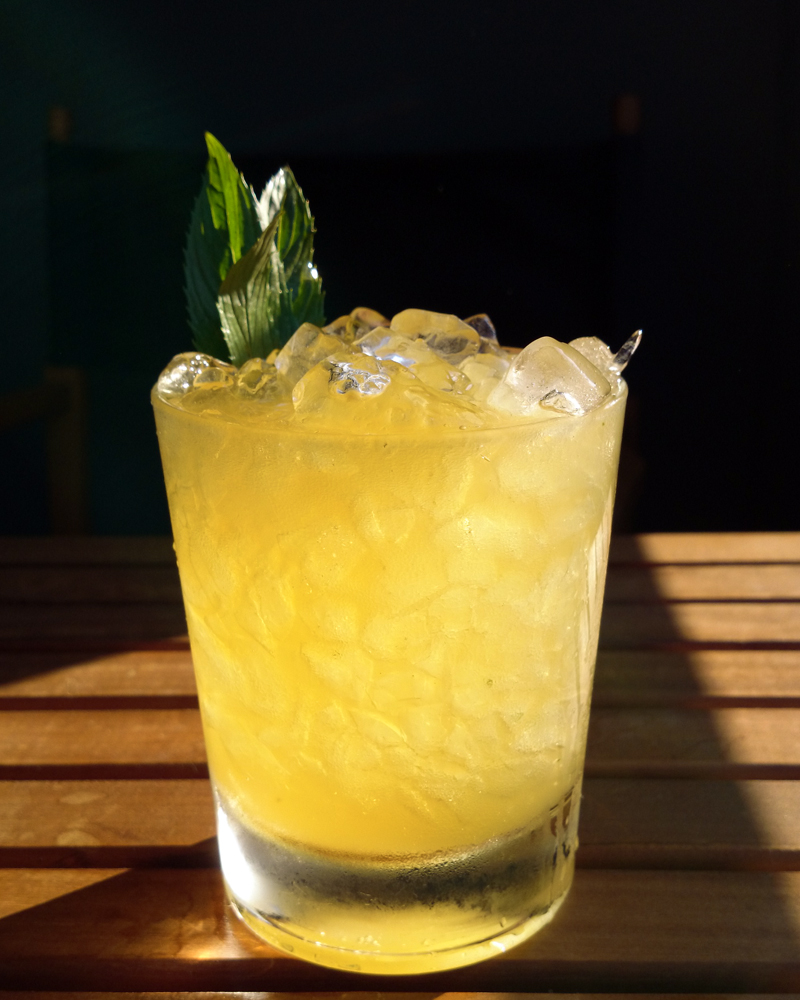
Shake all ingredients over ice, pour into an Old Fashioned glass full of crushed ice. Garnish with a sprig of mint.
———-

Armed with the knowledge that bourbon and passionfruit mix extremely well, we tried our hand at a taller drink. Mint and ginger both play nicely around passionfruit, and are right at home in a summer cocktail.

Port-light-variation

———-
Shiver Me Gingers

45ml Bourbon
30ml Passionfruit syrup
Handful mint leaves
Ginger beer (to taste)

Stir bourbon, passionfruit syrup and a couple of mint leaves with ice until well chilled, then strain into a large Old Fashioned glass filled with crushed ice. Top with ginger beer, garnish with a sprig of mint.
———-

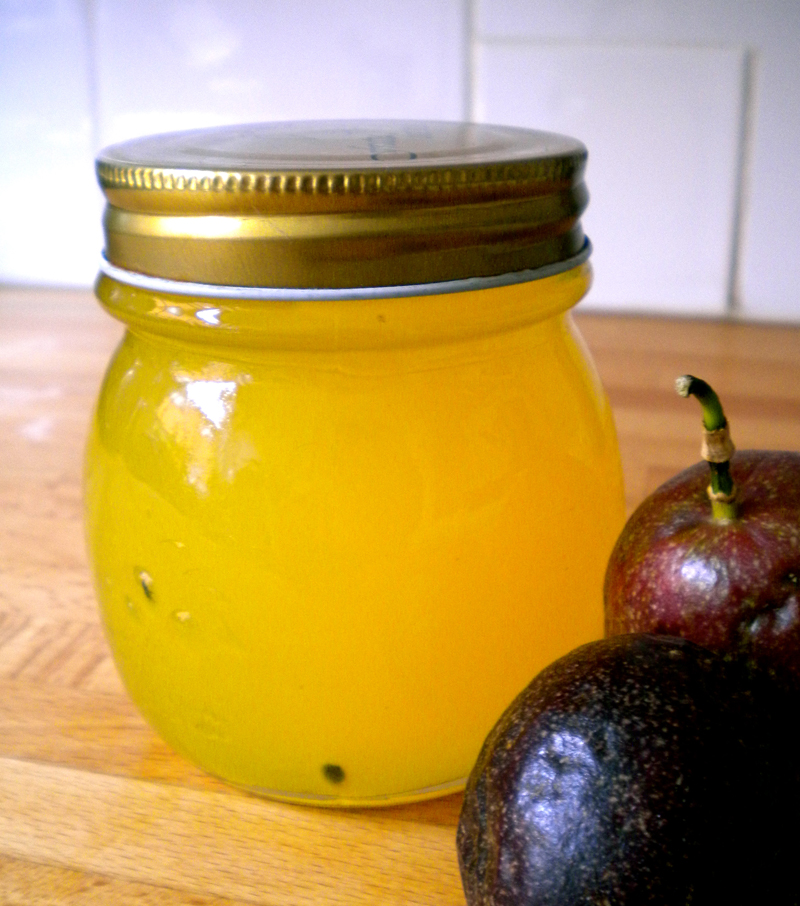
Passionfruit & Mint Syrup

Passionfruit, for those of us living in warmer climates, is a staple of summer. The interior of the fruit is vibrant, aromatic, and delicious; rather lucky as the exterior of the fruit has the appearance of a pickled testicle. The rich sweetness of the flesh is balanced by a tart acidity, making the fruit both versatile and adept at enhancing other flavours – it is equally at home in a bourbon or gin based beverage, and certainly knows its way around a stein full of tiki-based pleasure.

When making chutneys or jams, a combination of cooked and fresh fruit often produces the fullest flavour, so that process was opted for here. In the face of so much sugar and passionfruit the mint is rather subtle, it adds complexity and serves to highlight the flavour of the fruit. The amount of mint can be adjusted to suit your taste or intended use, or omitted entirely if you so desire.

It’s worth noting that our most recent batch of this syrup lasted about 3 days in the fridge, on account of it making a particularly excellent cordial. I strongly recommend a splash of it with soda water over ice, plus a few fresh mint leaves to garnish. If you suffer from a medieval European suspicion of water on it’s own (don’t you? Shouldn’t you?), you could always “disinfect” it with a generous splash of gin.

passionfruit

———-
Passionfruit & Mint Syrup

1 cup water
1 cup sugar
½ cup passionfruit juice & seeds (roughly 6-8 passion fruit) plus a few additional passionfruit
Handful fresh mint leaves

Mix water, sugar, and the ½ cup of passion fruit in a pan. Place over a medium high heat, make sure the sugar dissolves, and bring to a boil. Reduce to a simmer then remove from the heat after 1-2 minutes. Stir in the flesh from the remaining passionfruit and the mint leaves, cover, and let stand for a few hours. Strain out the solids, then bottle.
———-