Many and varied are the uses for dried citrus: it serves a multitude of delicious culinary functions; finds a home in tea, desserts & syrups; apparently performs decorative and homeopathic tasks (neither of which are in any way endorsed by us); almost certainly has a role in a number of fetish activities that we definitely know absolutely nothing about; and, most relevantly, flavours cocktails and liqueurs.
If, like us, you’re the kind of person who likes a good drink and has the motivation to faff about in the kitchen making some of your own ingredients, drying your own citrus is a sensible idea. We began drying orange zest to flavour the amaro and vermouth we’re making (updates on their progress at a later date), though soon discovered it’s also very useful for flavouring simple syrups.
Drying fruit serves the two main purposes of concentrating flavour and significantly increasing longevity. The technique is remarkably simple and, relative to purchasing pre-dried goods, it’s very cost effective. The methods and recipes below can be adapted to any citrus you might fancy.
Zest
Start with the best quality fruit you can source, then thoroughly wash. Peel the orange in whatever way you find easiest until left with only the coloured skin – pith will increase the bitterness. If you haven’t done so in a while, you might want to clean your oven before you begin. The zest will be in the oven for hours and you don’t want it taking on the aroma of cremated pork fat. If you can’t leave your oven door permanently ajar open it periodically to allow moisture, and pleasant citrusy aromas, to escape.
There can be a significant disparity in the drying time across different batches. Some of ours were fully dried and crisp to the touch after 3 hours, while others required up to six – just keep an eye on them after a couple of hours. You’ll know it’s done when it’s reduced in size by about 50%, and is reasonably brittle. Dry, really.
———-
Dried Orange Zest
2-3 Good quality oranges, washed (makes approximately 1 loosely packed cup)
If you have a sharp vegetable peeler, run it over the oranges. This should leave you with only the zest. If not, cut slices off with a knife, then remove all the white pith with a paring or serrated knife.
Preheat your oven to 60C. Place orange zest on a wire rack in the top third of the oven. Either leave the door slightly ajar, or open it periodically.
Dry for 3-6 hours, or until fully dehydrated and crisp. Store in an airtight container.
———-

Fruit
There are a number of ways you can go about drying slices of the fruit: unadulterated (sliced, zest and pith left on the flesh); skinned (sliced, zest and pith removed); and flavoured (dried with herbs and/or spices).
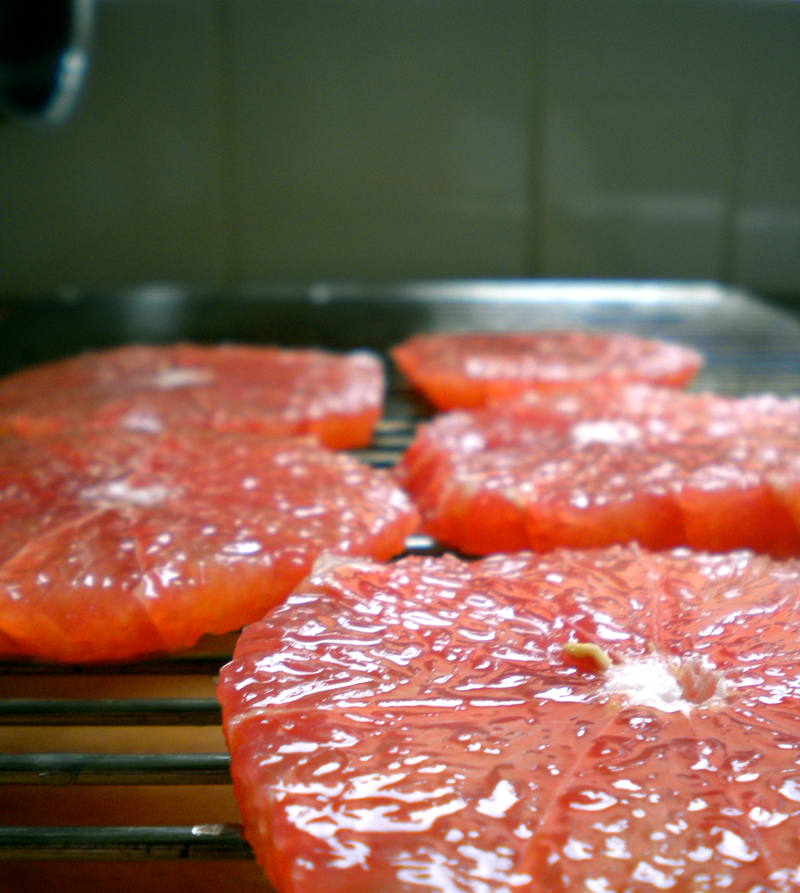
The unadulterated version is, unsurprisingly, the simplest. Cut the fruit into 5mm slices, then dry in the same manner as the zest. Slices will take longer than zest to dry given the increased thickness and moisture content, somewhere in the order of 8-10 hours. We used some of these whole slices as a flavouring agent for our initial batch of vermouth.
Drying slices without the zest and pith produces an end result with a sweeter, less complex flavour. All citrus survives only very briefly once the zest has been removed, so this is a good method for using any zested fruit you don’t plan on eating immediately. The best use for these is simply applying them directly to your face – they are essentially delicious orange chips.
———-
Dried Orange Chips
1 Orange makes 6-10 chips, depending on size, so adjust to how many you require
Slice the top and bottom off each orange, then sit flat and cut away all remaining skin and pith. Cut the orange crossways into 5mm slices.
Preheat your oven to 60C. Space out the orange slices on a wire rack and dry until completely crisp, approximately ten hours. Store in an airtight container.
———-
You can be quite creative with what you use to flavour as citrus pairs well with a broad range of herbs and spices. Infused citrus helps make a great batch of mulled wine or punch. With herbs, spread them out in the bottom of a baking tray to form a bed for the slices, then drizzle with a little olive oil. Lightly seasoning the citrus prior to drying will highlight any herby goodness that they absorb. If you’re opting to spice the fruit first toast and grind any whole spices, then rub over the flesh with a little olive oil prior to drying.
———-
Rosemary Infused Orange Slices
1 Orange makes 6-10 slices, so adjust to how many you require
Slice the top and bottom off each orange, then cut each orange crossways into 5mm slices.
Preheat your oven to 60C. Spread a sizeable bunch of rosemary over the base of a baking tray and drizzle with olive oil. Top with the oranges, lightly season, then cook until completely dried, approximately ten hours. Store in an airtight container.
———-
 The Functional Alchemist